
Reclaim.org Expands as the National Online Portal for Reclaiming Lost Money

Reclaim.org Guides & Resources
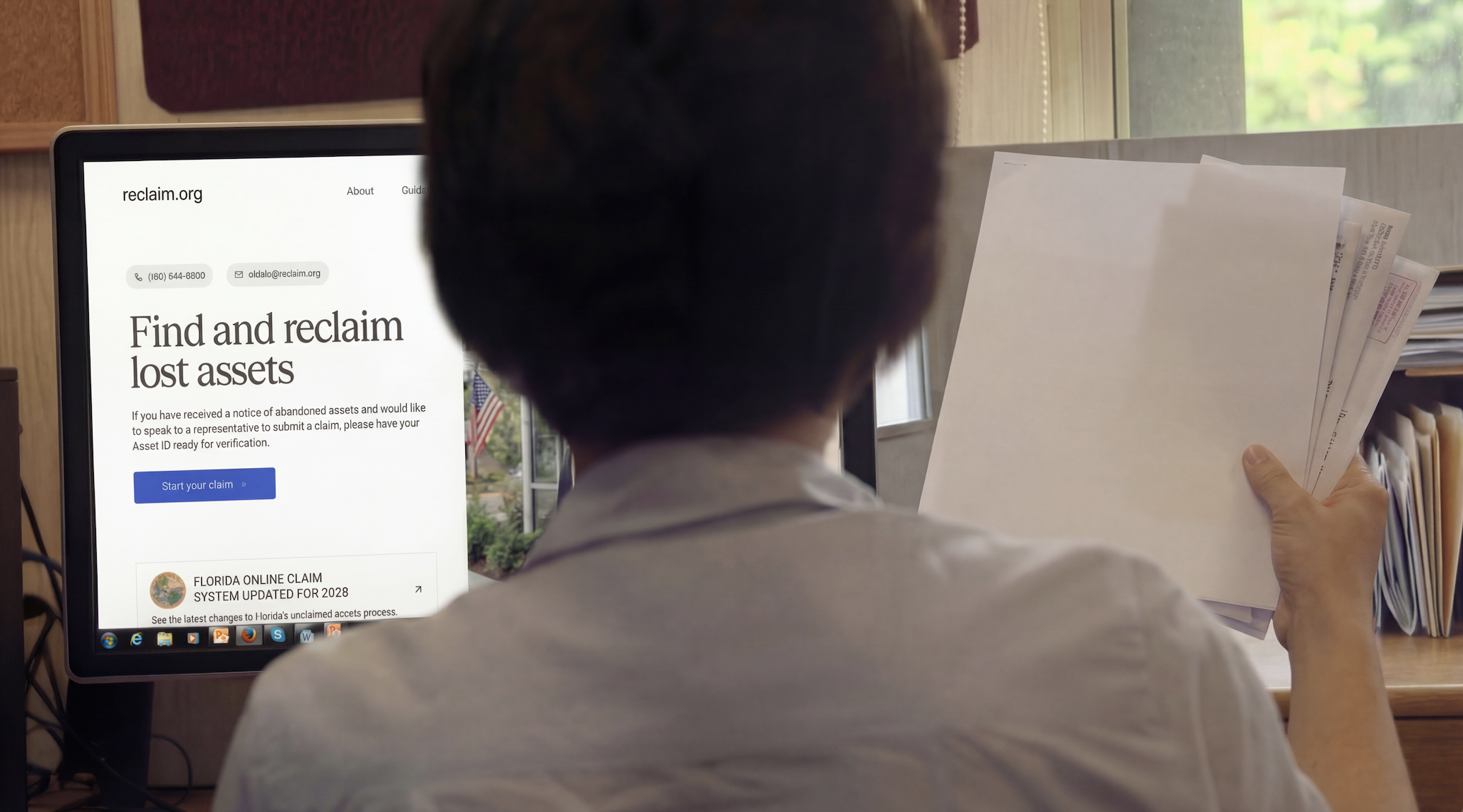
A user is on the reclaim.org website, which helps people find and reclaim lost funds. The person is holding a stack of papers, related to an asset claim.
Public information site publishes a national overview of unclaimed money programs and expands its online portal with guidance covering all 50 states.
WASHINGTON, DC, UNITED STATES, February 6, 2026 /EINPresswire.com/ -- Reclaim.org, a public information site focused on unclaimed money, has published a new overview of unclaimed money programs in the United States and expanded its online portal to provide guidance for residents and businesses in all 50 states and U.S. territories.The overview compiles publicly available figures and program descriptions from government sources to describe how unclaimed money is created, how it moves into government custody, and how it is ultimately returned to owners. It notes that public reports from multiple jurisdictions indicate that tens of billions of dollars in unclaimed money are currently being held for individuals, families, businesses, and estates, while several billion dollars are returned each year as claims are processed.
The expansion of Reclaim.org coincides with publication of the overview and reflects the national scope of the issue.
National overview: common patterns across programs
The Reclaim.org document highlights several recurring features of unclaimed money programs:
Everyday origins
Unclaimed money frequently arises from routine events such as moving to a new address, changing jobs, closing accounts, or changes in corporate ownership at financial institutions and insurers. Checks that are mailed but not deposited and deposits that are not returned are common sources.
Multiple jurisdictions
People who have lived or worked in several states can have potential claims in more than one jurisdiction. The overview notes that program rules generally tie unclaimed money to the last known address or to the state where a business is organized, which means a single person or organization may need to review several locations.
Administrative procedures
While the core purpose of programs is similar, terminology, documentation requirements, and processing times differ across jurisdictions. Identification, proof of address, and records showing a connection to an account or policy are frequently requested.
Impact on organizations
The report also notes that unclaimed money is not limited to individual account holders. Businesses and nonprofits may have unreturned deposits, credits, or refunds recorded under their names, particularly when they have changed locations or service providers.
Expansion of the Reclaim.org online portal
Alongside publication of the national overview, Reclaim.org has expanded its online portal so that it now provides:
Descriptions of how unclaimed money programs generally operate, from reporting of dormant accounts to review of claims
Articles that explain common documentation requests and the reasons those records are used to establish ownership
Checklists for people who have lived or worked in multiple states and need to plan searches across several jurisdictions
Sections that outline typical steps for families and heirs managing matters for a deceased relative, and for small organizations that may have balances listed in their name
The portal is structured to allow users to review information about unclaimed money and then contact the appropriate offices directly. Access to the information on Reclaim.org is provided at no cost to the public.
Examples of situations covered
The national overview and the updated portal describe several types of situations in which unclaimed money can arise, including:
A refund check or final payroll check mailed to a former address and never deposited
A utility deposit associated with a previous rental that was not returned after the account was closed
An insurance payment issued after a policyholder’s death that could not be delivered to the listed beneficiary
Vendor credits and deposits left on the books of a business or nonprofit after a change in address or provider
By documenting these examples, Reclaim.org aims to show how unclaimed money can be created in ordinary circumstances and why it may appear years later in program databases.
Future areas of focus
Reclaim.org plans to update its overview periodically as new public data and program changes are released. Future work is expected to include:
Additional summaries of procedural changes at unclaimed money programs in different jurisdictions
Further examples illustrating how residents, families, and organizations encounter unclaimed money in practice
Expanded reference materials for people managing multiple claims in several jurisdictions at the same time
These activities are intended to provide the media, policymakers, and the public with a clearer picture of how unclaimed money programs operate and how residents interact with them.
About Reclaim.org
Reclaim.org is a national online portal and public information site focused on unclaimed money in the United States. The site compiles program descriptions, process explanations, and reference materials to help individuals, families, and organizations understand how unclaimed money is created, how it is held by government custodians, and what steps are typically involved in reclaiming it.
Mark Michaels
Reclaim.org
email us here
Legal Disclaimer:
EIN Presswire provides this news content "as is" without warranty of any kind. We do not accept any responsibility or liability for the accuracy, content, images, videos, licenses, completeness, legality, or reliability of the information contained in this article. If you have any complaints or copyright issues related to this article, kindly contact the author above.
